Why a Refrigerated Compressed Air Dryer Is Essential
Moisture in compressed air systems can damage tools, corrode pipelines, and compromise product quality—leading to downtime and costly repairs.
A refrigerated compressed air dryer removes water vapor by cooling the air to near-freezing temperatures, causing condensation that is then drained. The result is clean, dry air that protects your equipment, prevents rust, and ensures operational efficiency.
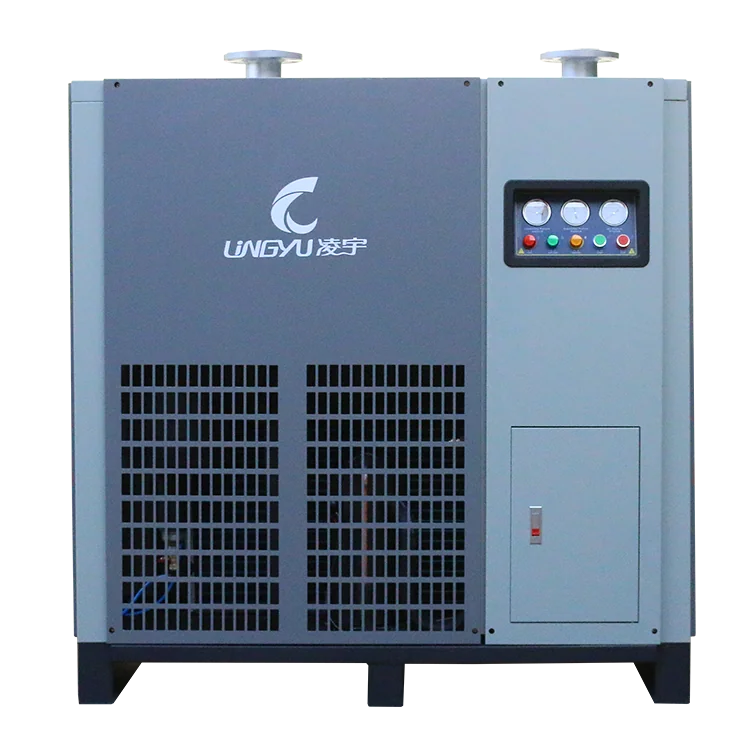
What Is a Refrigerated Compressed Air Dryer?
A refrigerated compressed air dryer reduces the moisture content of compressed air using a refrigeration-based cooling system.
As air passes through the dryer:
It is cooled to 35°F–50°F (1.6°C–10°C)
Water vapor condenses and is drained
Dry air is reheated slightly before returning to the system
Types of Refrigerated Air Dryers:
Non-Cycling Models: Run continuously; simple, reliable, and cost-effective for steady loads.
Cycling Models: Adjust cooling based on demand, saving energy during low usage periods.
How It Works
Hot, moist compressed air enters the dryer.
Air is cooled in a refrigeration heat exchanger.
Condensed water is collected and removed.
Dry, slightly reheated air exits for use in tools and machinery.
This process delivers consistent dew points and moisture-free air.
Key Features and Benefits
✅ Moisture-Free Compressed Air – Prevents rust, scaling, and equipment malfunctions.
✅ Energy-Efficient Operation – Cycling models reduce energy consumption during low demand.
✅ Easy Installation & Maintenance – Compact, plug-and-play design with minimal upkeep.
✅ Consistent Dew Point Control – Maintains approximately +3°C (37°F) for reliable performance.
✅ Extended Equipment Life – Protects valves, actuators, piping, and pneumatic tools.
Technical Specifications (Example)
| Parameter | Value |
|---|---|
| Flow Rate | 20 – 2000+ SCFM (customizable) |
| Dew Point | 35°F – 50°F |
| Power Supply | 110V / 220V / 380V options |
| Max Inlet Temperature | 120°F (standard models) |
| Max Operating Pressure | 150 PSI (10 bar) |
| Refrigerant Type | R134a / R407C |
| Drain Type | Automatic electronic |
| Control Panel | LED or digital with alarms |
Applications
Refrigerated compressed air dryers are ideal for:
🏭 Manufacturing Plants – Machine tools, automation, injection molding
🛠 Automotive Workshops – Spray painting, pneumatic tools, tire inflation
🥫 Food & Beverage – Packaging, bottling lines, conveyors
💊 Pharmaceutical Facilities – Cleanrooms, capsule filling
📦 Packaging Industry – Air knives, vacuum sealing, labeling
🏗 Construction – Pneumatic drills, sandblasting, jackhammers
Suitable for both small shops and large industrial lines, these dryers ensure a reliable, moisture-free air supply.
How to Choose the Right Dryer
Calculate Flow Requirements – Match compressor output in SCFM or m³/min.
Check Inlet Conditions – Evaluate temperature and humidity.
Consider Energy Efficiency – Cycling models save power long-term.
Plan Maintenance Access – Ensure room for drains and filter changes.
Balance Budget & Performance – Optimize initial investment versus long-term savings.
Maintenance Tips
Clean condenser coils monthly
Test automatic drain valves weekly
Replace pre-filters regularly
Verify dew point readings
Schedule annual refrigerant inspections
Routine maintenance ensures energy efficiency, reliable performance, and a long service life.
Frequently Asked Questions
Q1: How does it work?
It cools air to 35°F–50°F, condensing moisture for removal, delivering dry air to your system.
Q2: Difference between cycling and non-cycling dryers?
Cycling dryers adjust cooling based on demand to save energy; non-cycling dryers run continuously.
Q3: Typical dew point?
+3°C (37°F), suitable for most industrial applications.
Q4: Can it be installed outdoors?
Standard models are indoor rated; weatherproof versions are available.
Q5: Is pre-filtration necessary?
Yes. Pre-filters remove oil and particles, extending dryer life.
Conclusion: Invest in Reliable Air Quality
A refrigerated compressed air dryer is essential for protecting machinery, ensuring product quality, and reducing maintenance costs.
Choose a dryer designed to perform under pressure, delivering energy-efficient, reliable, and consistent dry air for your compressed air system.
📞 Contact us today for a quote or expert sizing assistance.