Retrofit untuk penghematan energi pada compressed air system dapat mencakup leak repair, pressure reduction, dryer upgrade, atau peningkatan compressor sequencing. Namun setelah commissioning, masih ada dua pertanyaan yang harus dijawab:
Berapa banyak energi yang benar-benar berhasil dihemat?
Apakah sistem telah mencapai performance yang ditargetkan tanpa mengorbankan production reliability?
Inilah tujuan dari compressed air system energy-saving acceptance.
Acceptance process yang terstruktur membandingkan post-retrofit performance dengan baseline yang valid, memverifikasi energy savings dalam representative operating conditions, mengidentifikasi system problem yang masih tersisa, dan menetapkan benchmark baru untuk long-term energy management.
Tujuannya bukan sekadar memastikan bahwa equipment baru telah dipasang. Tujuannya adalah membuktikan bahwa keseluruhan compressed air system memberikan performance yang lebih baik dan dapat diukur.
Mengapa Energy-Saving Acceptance Penting?
Electricity bill yang lebih rendah setelah retrofit mungkin terlihat sebagai bukti bahwa proyek berhasil.
Namun, electricity consumption saja dapat menyesatkan.
Production output mungkin menurun. Operating hours mungkin berubah. Air demand mungkin lebih rendah. Seasonal conditions juga mungkin berbeda.
Karena itu, energy-saving acceptance harus mengevaluasi electricity consumption bersama dengan airflow, operating pressure, production load, dan variabel relevan lainnya.
Professional acceptance process memberikan tiga manfaat utama.

1. Memverifikasi Actual Energy Savings
Setiap retrofit harus dimulai dengan objective yang didefinisikan dengan jelas, seperti:
- Lower compressor electricity consumption
- Reduced specific energy consumption
- Lower system leakage
- Reduced operating pressure
- Improved pressure stability
- Reduced unloaded compressor operation
- Improved compressor sequencing
Acceptance membandingkan objective tersebut dengan actual post-retrofit performance.
Basic energy-saving calculation adalah:
Energy-Saving Rate = (Baseline Energy Consumption − Post-Retrofit Energy Consumption) ÷ Baseline Energy Consumption × 100%
Namun, perhitungan ini hanya bermakna jika before-and-after operating conditions dapat dibandingkan secara wajar.
2. Mengidentifikasi System Problem yang Masih Tersisa
Retrofit dapat mengurangi energy consumption tetapi sekaligus menimbulkan atau meninggalkan masalah lain yang belum terselesaikan.
Contohnya meliputi:
- Incorrect VFD settings
- Poor compressor sequencing
- Excessive pressure fluctuations
- Remaining compressed air leaks
- Unexpected pressure drop
- Insufficient air selama peak demand
- Poor dryer performance
- Inadequate storage atau distribution capacity
Acceptance testing membantu mengidentifikasi masalah tersebut sebelum proyek dianggap selesai.
3. Menetapkan Performance Baseline Baru
Setelah retrofit, measured operating condition menjadi referensi untuk future maintenance.
Useful indicator dapat meliputi:
- Total compressor electricity consumption
- Specific energy consumption
- Compressed air flow
- Main-header pressure
- Point-of-use pressure
- Low-production air demand
- Compressor loading behavior
- Dryer pressure dew point
- Filter dan dryer differential pressure
Jika indikator tersebut memburuk di kemudian hari, maintenance personnel dapat menyelidiki penyebabnya sebelum energy loss menjadi serius.
Five-Step Compressed Air Energy-Saving Acceptance Process
Practical acceptance procedure dapat dirangkum sebagai:
Baseline Preparation → Performance Testing → Energy Evaluation → System Inspection → Acceptance Report
Setiap langkah menjawab pertanyaan yang berbeda mengenai keberhasilan retrofit.
Step 1: Tetapkan Baseline yang Valid
Langkah pertama adalah menentukan bagaimana compressed air system bekerja sebelum retrofit.
Useful baseline data dapat mencakup:
- Compressor electricity consumption
- Operating hours
- Production output
- Compressed air flow
- Main system pressure
- Point-of-use pressure
- Compressor load/unload behavior
- Low-production atau non-production air demand
Abnormal period seperti shutdown, major maintenance, temporary production change, atau equipment failure tidak boleh dianggap sebagai normal baseline operation.
Bandingkan Equivalent Operating Conditions
Ini merupakan salah satu acceptance principle yang paling penting.
Jika production output setelah retrofit jauh lebih rendah daripada sebelum retrofit, penurunan electricity consumption tidak secara otomatis berarti efficiency improvement.
Jika operating conditions berbeda, normalized indicator harus digunakan.
Sebagai contoh:
kWh per unit of production
atau:
kWh per unit volume of compressed air delivered
Tujuannya adalah memisahkan true system-efficiency improvement dari perubahan production demand.
Step 2: Uji Sistem dalam Representative Loads
Acceptance harus mencerminkan bagaimana fasilitas benar-benar beroperasi.
Testing harus mencakup representative conditions seperti:
- Peak production
- Normal production
- Partial load
- Low-production period
- Major intermittent air-demand event
Tidak ada satu test duration yang sesuai untuk setiap compressed air system.
Measurement period harus cukup panjang untuk menangkap normal operating pattern dari fasilitas.
Ukur Energy Consumption
Electrical measurement harus mencakup equipment yang terdampak oleh retrofit.
Tergantung pada project scope, hal ini dapat meliputi:
- Individual compressor power
- Total compressor-system power
- VFD input power
- Major auxiliary equipment
Measurement instrument harus sesuai dengan expected load dan required accuracy.
Ukur Airflow dan Pressure
Energy consumption harus selalu dievaluasi bersama dengan compressed air output.
Useful measurement meliputi:
- Total airflow
- Compressor discharge pressure
- Main-header pressure
- Point-of-use pressure
- Pressure pada major treatment equipment
Hal ini mencegah penurunan air demand dilaporkan secara keliru sebagai efficiency improvement.
Pressure measurement juga berguna untuk mengidentifikasi unnecessary system loss. Lihat bagaimana compressed air pressure drop memengaruhi system efficiency untuk diagnostic approach yang lebih detail.
Periksa Leakage
Jika leak repair merupakan bagian dari retrofit, post-retrofit leakage condition juga harus diverifikasi.
Metode yang dapat digunakan meliputi:
- Ultrasonic leak detection
- Flow measurement selama low-production period
- Compressor operating analysis
- Pressure decay testing jika sesuai
Pressure decay dapat berguna, tetapi satu fixed pressure-decay time tidak boleh dianggap sebagai universal leakage percentage karena hasilnya bergantung pada system volume, pressure, temperature, dan test configuration.
Untuk complete leak-management process, lihat panduan compressed air leak detection dan repair.
Step 3: Hitung dan Normalize Energy Savings
Setelah representative data dikumpulkan, actual energy performance dapat dievaluasi.
Hitung Energy Savings
Untuk periode yang dapat dibandingkan secara langsung:
Energy Savings = Baseline Energy Consumption − Post-Retrofit Energy Consumption
Hitung Energy-Saving Rate
Energy-Saving Rate = Energy Savings ÷ Baseline Energy Consumption × 100%
Hasilnya hanya boleh diinterpretasikan setelah memastikan bahwa measurement period mewakili comparable operating conditions.
Evaluasi Specific Energy Performance
Untuk compressor system, specific energy consumption dapat menjadi efficiency indicator yang lebih baik daripada electricity consumption saja.
Secara konseptual:
Specific Energy Consumption = Electrical Energy Input ÷ Useful Compressed Air Output
Untuk production-oriented facility, KPI lain yang berguna adalah:
Compressed Air Energy Consumption per Unit of Production
Indikator ini membantu menentukan apakah sistem benar-benar menjadi lebih efisien dan bukan sekadar menghasilkan compressed air lebih sedikit.
Estimasi Annual Savings dan Payback
Jika measured period bersifat representatif:
Annual Energy Savings = Normalized Energy Savings × Annual Operating Periods
Simple financial indicator kemudian dapat dihitung:
Simple Payback Period = Project Investment ÷ Annual Monetary Savings
Actual operating hours dan electricity price harus digunakan daripada generic assumption.
Evaluasi Keseluruhan Sistem
Energy savings tidak boleh dihitung hanya dari compressor power jika retrofit memengaruhi downstream treatment equipment.
Tergantung pada project scope, evaluasi juga mungkin perlu mencakup:
- Refrigerated dryer electricity
- Regenerative dryer purge-air consumption
- Dryer heater atau blower energy
- Filter pressure drop
- Dryer pressure drop
- Cooling equipment
System retrofit harus meningkatkan total cost untuk menghasilkan usable compressed air—bukan sekadar memindahkan energy consumption dari satu komponen ke komponen lainnya.
Step 4: Verifikasi Pressure, Air Quality, Leakage, dan Controls
Mencapai energy-saving target saja tidak cukup.
Sistem tetap harus menyediakan required compressed air quality dan production performance.
Verifikasi Pressure Stability
Ukur pressure pada beberapa titik:
Compressor Room → Air Treatment → Main Header → Production Branch → Point of Use
Hal ini membantu menentukan apakah retrofit menyebabkan excessive restriction atau pressure fluctuation.
Jangan menerapkan satu universal pressure-fluctuation limit untuk setiap fasilitas.
Acceptance criterion harus didasarkan pada pressure yang dibutuhkan oleh downstream equipment.
Verifikasi Dryer Performance
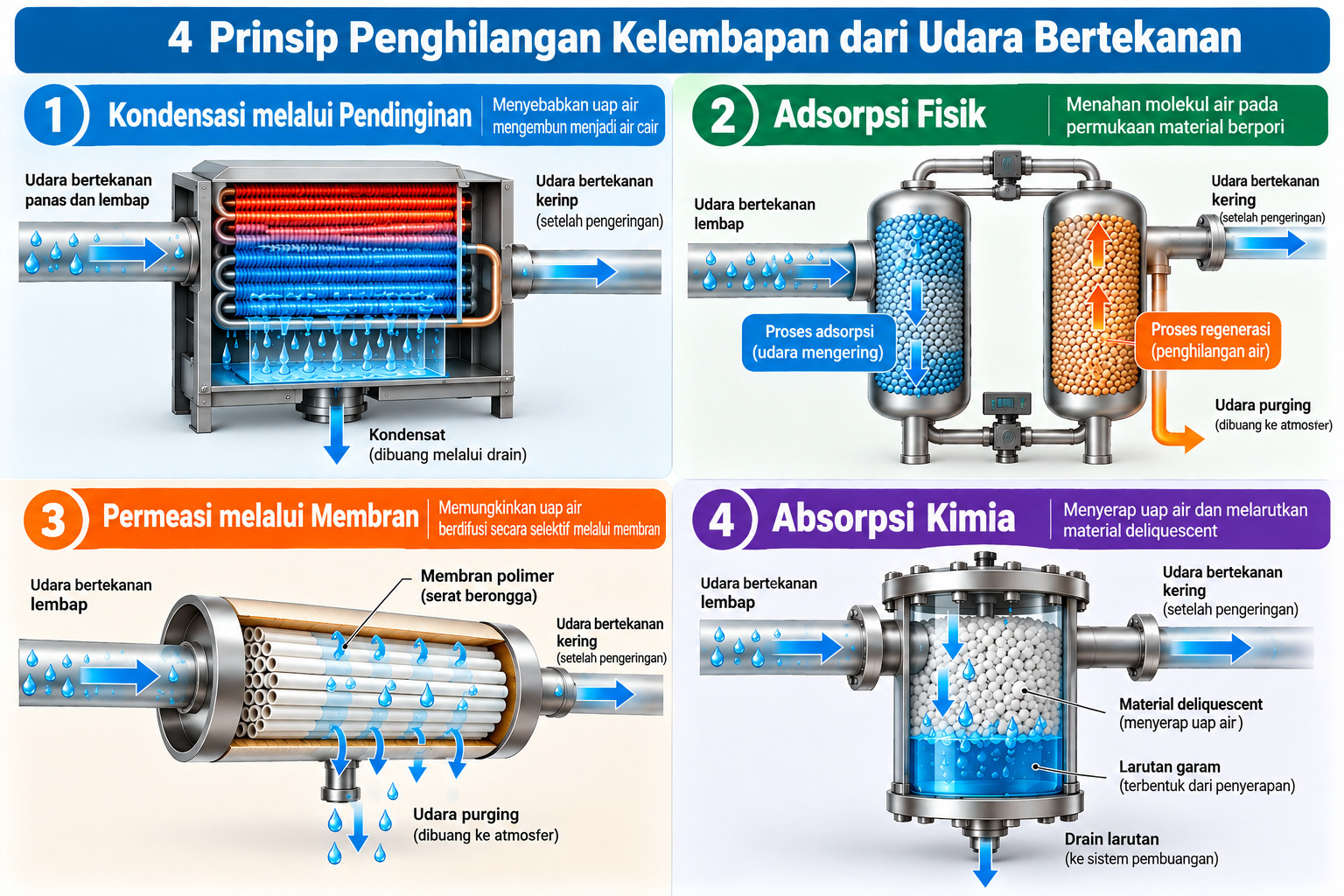
Jika sistem memiliki air dryer, pastikan outlet pressure dew point memenuhi actual process requirement.
Jangan menerapkan satu universal PDP target pada setiap instalasi.
Dryer technology yang berbeda dirancang untuk air-quality requirement yang berbeda. Sebagai contoh, refrigerated air dryer dan desiccant air dryer tidak boleh secara otomatis dievaluasi berdasarkan pressure dew point target yang sama.
Acceptance principle yang benar adalah:
Required Process Air Quality = Delivered Air Quality
Periksa Filter dan Air-Treatment Equipment
Pastikan treatment equipment memberikan required air quality tanpa unnecessary pressure loss.
Typical check meliputi:
- Filter differential pressure
- Dryer pressure drop
- Condensate drain
- Dryer operating condition
- Relevant sensor dan instrument
Energy efficiency tidak boleh dicapai dengan membiarkan treatment performance memburuk.
Verifikasi Compressor Controls
Untuk VFD atau multi-compressor system, periksa:
- Stable speed control
- Compressor sequencing
- Base-load dan trim-compressor behavior
- Standby response
- Pressure control
- Alarm dan protection function
High-efficiency compressor tetap dapat beroperasi secara tidak efisien jika beberapa compressor terus-menerus saling bersaing akibat poor control logic.
Periksa Kembali Leak Repair
Leak yang sebelumnya telah diidentifikasi harus diperiksa kembali setelah repair.
Leak tidak boleh dianggap selesai hanya karena fitting telah dikencangkan atau diganti.
Proses yang tepat adalah:
Detect → Record → Repair → Verify
Step 5: Siapkan Acceptance Report dan Monitoring Baseline
Final result harus didokumentasikan dalam formal acceptance report.
Report harus mencakup:
- Project scope
- Baseline period
- Baseline performance
- Post-retrofit measurement period
- Production conditions
- Measurement methods
- Energy consumption
- Airflow dan pressure
- Relevant air-quality results
- Before-and-after comparison
- Normalization method
- Calculated energy savings
- Financial results jika berlaku
- Remaining defects
- Corrective actions
- Final verification results
Setiap project objective idealnya diklasifikasikan sebagai:
Achieved / Partially Achieved / Not Achieved
Hal ini memberikan informasi yang lebih berguna daripada sekadar menyatakan bahwa proyek telah lulus acceptance.
Tetapkan Post-Retrofit Monitoring
Acceptance data juga harus menjadi system-performance baseline yang baru.
Useful long-term monitoring indicator dapat mencakup:
- Compressor energy consumption
- Specific energy consumption
- Compressed air flow
- Main-header pressure
- Point-of-use pressure
- Leakage indicator
- Compressor operating hours
- Unloaded operating time
- Dryer pressure dew point
- Filter dan dryer differential pressure
Jika indikator tersebut secara bertahap memburuk, maintenance team dapat melakukan investigasi sebelum manfaat energy saving awal hilang.
Common Mistakes Selama Energy-Saving Acceptance
Beberapa kesalahan dapat membuat retrofit terlihat lebih berhasil—atau kurang berhasil—daripada kondisi sebenarnya.
Membandingkan Electricity Consumption Tanpa Production Output
Production yang lebih rendah dapat menghasilkan energy use yang lebih rendah meskipun system efficiency tidak meningkat.
Karena itu, before-and-after electricity consumption harus dievaluasi terhadap production output, compressed air delivery, atau normalized indicator lain yang sesuai.
Hanya Mengukur Compressor Power
Airflow, pressure, dan relevant treatment-system performance juga harus dievaluasi.
Lower compressor power reading saja tidak membuktikan bahwa keseluruhan sistem telah menjadi lebih efisien.
Menurunkan Pressure Tanpa Memeriksa Point of Use
Compressor discharge pressure terendah belum tentu merupakan optimal operating pressure.
Pressure harus tetap mencukupi pada point of use dalam representative production conditions.
Mengabaikan Compressed Air Quality
Retrofit tidak berhasil jika lower energy consumption menyebabkan dryer atau filtration system gagal memenuhi process requirements.
Karena itu, pressure dew point dan relevant air-quality indicator lainnya harus tetap menjadi bagian dari acceptance process.
Menganggap Leak Repair Bersifat Permanen
Leak baru dapat berkembang seiring waktu.
Post-retrofit leakage condition harus menjadi baseline untuk future leak management, bukan dianggap sebagai hasil yang permanen.
Tentukan Acceptance Criteria Sebelum Proyek Dimulai
Salah satu cara terbaik untuk menghindari perselisihan adalah menyepakati acceptance method sebelum implementasi.
Customer dan supplier harus menentukan:
- Baseline period
- Measurement boundary
- Performance indicator
- Production normalization method
- Energy-saving target
- Required system pressure
- Required compressed air quality
- Test period
- Savings calculation method
- Final acceptance criteria
Measurement boundary sangat penting.
Sebagai contoh, tentukan apakah proyek mengevaluasi:
Compressors only
atau:
Compressors + dryers + cooling + compressed air treatment equipment
Tanpa boundary yang didefinisikan dengan jelas, calculation method yang berbeda dapat menghasilkan savings result yang sangat berbeda.
Lima Pertanyaan Sebelum Final Acceptance
Sebelum memberikan final approval pada compressed air energy-saving project, pastikan measured data dapat menjawab lima pertanyaan:
- Apakah energy consumption menurun dalam comparable operating conditions?
- Apakah sistem tetap memberikan required airflow dan pressure untuk produksi?
- Apakah compressed air quality tetap memenuhi process requirement?
- Apakah leakage, pressure drop, compressor controls, dan treatment equipment telah diperiksa untuk menemukan masalah yang masih tersisa?
- Apakah documented post-retrofit performance baseline telah ditetapkan?
Jika pertanyaan tersebut tidak dapat dijawab menggunakan measured data, proyek mungkin belum siap untuk final acceptance.
Kesimpulan: Ubah Energy-Saving Investment Menjadi Measurable Performance
Compressed air energy-saving retrofit belum selesai ketika equipment baru mulai beroperasi.
Retrofit selesai ketika sistem menunjukkan, melalui comparable dan documented measurement, bahwa expected improvement benar-benar telah tercapai.
Practical acceptance process harus mengikuti:
Baseline → Measure → Normalize → Evaluate → Inspect → Verify → Document → Monitor
Energy savings harus selalu dievaluasi bersama dengan airflow, system pressure, point-of-use pressure, compressed air quality, leakage, dan production conditions.
Hal ini mencegah tiga kesalahan umum:
- Menganggap lower production sebagai energy savings
- Mengurangi energy consumption dengan mengorbankan production performance
- Menutup proyek sebelum remaining system problem diperbaiki
Jika acceptance dilakukan dengan benar, proses ini tidak hanya memverifikasi return on investment.
Acceptance juga menetapkan measurable operating baseline yang mendukung continuous compressed air energy management dan membantu melindungi long-term value dari retrofit.
Jika Anda membutuhkan dukungan untuk mengevaluasi compressed air treatment performance sebagai bagian dari energy-saving project, hubungi Lingyu untuk technical support.